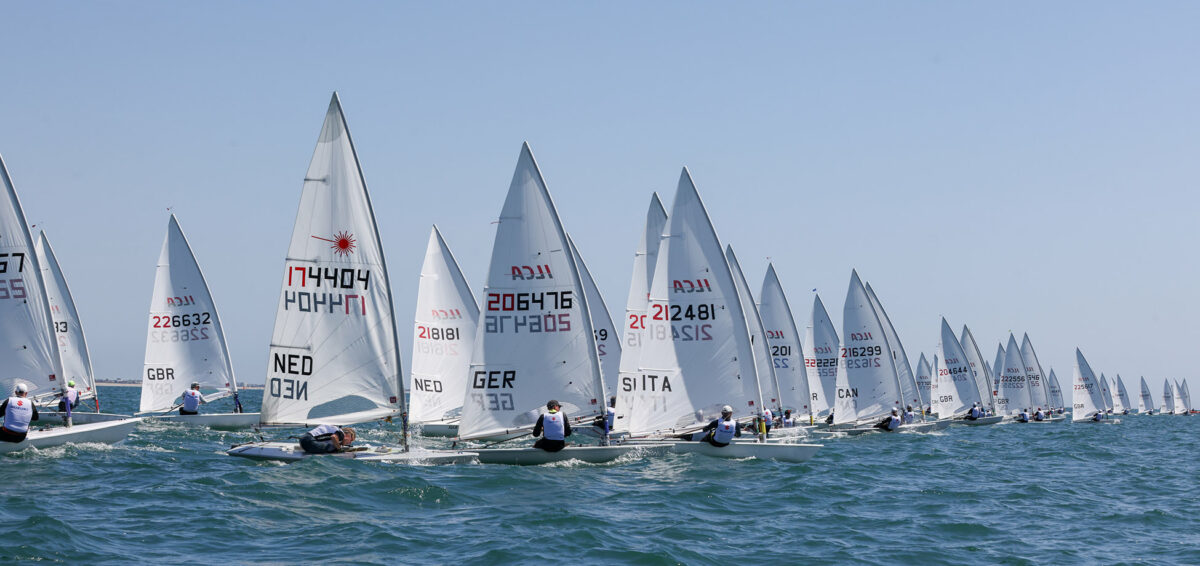
From 19–25 September, La Baule on France’s Atlantic coast will host the 2026 ILCA Masters European Championships, bringing together sailors aged 30 and up for a week of racing across the ILCA 6 and ILCA 7 fleets. It’s one of the highlights of the Masters calendar — proof that competitive careers in the class don’t end when Olympic ambitions do. Here’s a look at who’s coming, what the fleet looks like, and how to follow the action.
A big fleet, a truly global one. With 136 boats in the ILCA 7 and 152 in the ILCA 6 — 288 entries in total — this is a serious turnout for a Masters championship. Sailors are coming from 28 nations, 15 of them European, with sizeable delegations also arriving from North America, South America and Oceania. It’s a reminder that Masters sailing isn’t a niche add-on to the Olympic classes — it’s a full-blown international circuit in its own right.
The hosts lead the way. France fields the largest contingent by a distance, 61 sailors, benefiting from the home-water advantage and a deep-rooted Laser/ILCA culture that dates back decades. The Netherlands (51) and Great Britain (44) round out the top three, both countries with long histories of strong Masters participation in Europe.
23 women on the startline. Female participation remains a minority across both fleets, but 23 women racing is a meaningful showing for a Masters championship, and worth watching as a marker of how women’s participation in the class develops as it grows internationally.
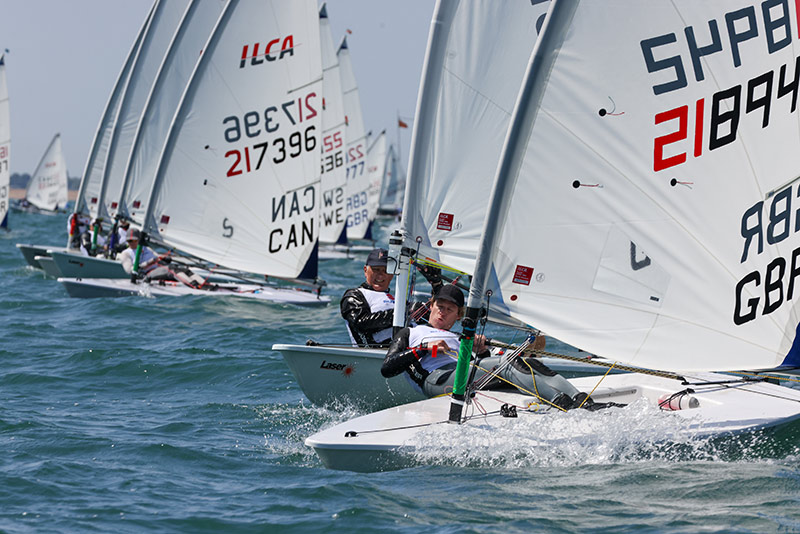
Age groups: the fleet skews experienced. The Grand Master category (55–64) is the largest single group, 119 sailors, 41% of the fleet, followed by Great Grand Masters (65–74) at 91 sailors, 31%. Together that’s nearly three-quarters of the entire fleet aged 55 and over — a strong signal of just how long top-level ILCA sailors are staying competitive.
Legends take center stage — for the first time in the ILCA 7. Twenty sailors aged 75+ are entered as Legends, and this event marks a milestone: it’s the first time the Legend category has been contested in the ILCA 7 fleet at a European Championship, following its debut at the 2026 Masters Worlds in Athens earlier this year. Watching how the oldest fleet in the world’s most competitive singlehanded class fares in France will be one of the storylines of the week.
Familiar faces, new age brackets. As with every Masters championship, the entry list includes a number of sailors with serious pedigree — former Olympic competitors and past World and European champions who’ve simply aged into new categories over the years. Part of the fun of following a Masters fleet is watching how much of that competitive edge carries over decades later, long after the Olympic spotlight has moved on.
Follow it live. EurILCA will be running live tracking every day across all fleets, published on the event website, so the racing — and the inevitable battles within each age category — should be easy to follow remotely throughout the week.
The event is organised by Yacht Club de La Baule in conjunction with EurILCA.