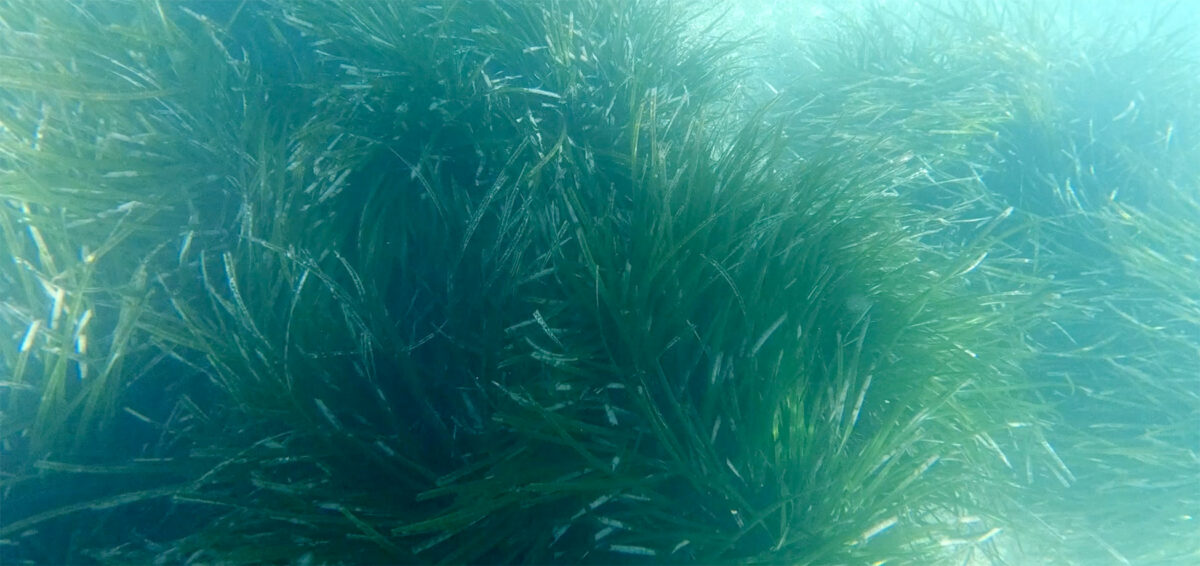

The sea is sailors’ home, but it is also home to fragile ecosystems that need our care. One of the Mediterranean’s most valuable treasures is Posidonia oceanica, a seagrass species that oxygenates water, protects beaches, and shelters countless other marine species. Every time we sail, anchor, or drop litter, we leave a mark. Learning how to navigate responsibly is beneficial for the environment but also for the sailing community and all others who rely on or come into contact with the sea.
Since the 1960s, Posidonia oceanica seagrass coverage in the Mediterranean has been reduced significantly (by almost half) due to human activities that have altered marine ecosystems. These include water pollution, the expansion of large ports, littering and plastic debris, trawling fisheries and near-shore anchoring of boats and vessels, but climate change is also a major cause of its reduction.
To understand its importance, Posidonia seagrass is capable of absorbing 15 times more carbon dioxide than the Amazon forest when comparing same-sized surfaces. This means that seagrass is a great expert at targeting carbon emissions and keeping the sea clean and oxygenated. All the more reason to preserve and protect Posidonia from preventable harm.
Salinity
Posidonia oceanica is a stenohaline species (from Greek “στενός” —tight— and “ἁλινός” —salt), which means that it is significantly sensitive to the salinity changes of seawater. A high increase in salt reduces Posidonia’s respiratory, reproductive and photosynthetic capabilities as well as its growth rate. A higher concentration of salt depletes oxygen from the water, partially blocks light and limits seagrass water absorption, which results in osmotic stress and necrosis. Essentially Posidonia can only survive within given ecological conditions.
A Practical Salinity Unit (PSU) measures the grams of salt per litre of water. Above 40 PSU, Posidonia begins to struggle, while hypersalinity (concentrations above 50 PSU) is lethal to the species. An extreme increase in sea temperatures disrupts the water cycle, raising acidity and salinity levels and overall water density which is why climate change could actively damage and furthermore shorten seagrass extent and marine biodiversity. The Mediterranean has a higher temperature increase and water evaporation than other seas due to geographic and climatic conditions. Water temperatures have risen to such a rapid extent that some claim the Mediterranean Sea is experiencing a process of tropicalization.
Direct sunlight and adequate salinity are indispensable to this species which can only live within 0 to 50 metres in depth. Land-originated contamination from rivers, swamps, coastal lakes and lagoons, desalination plants, leaking sewage, industrial discharge, and pesticide and fertilizer runoff can alter the turbidity and chemical composition of coastal waters, putting seagrass meadows at risk.
Anchors and fishing nets
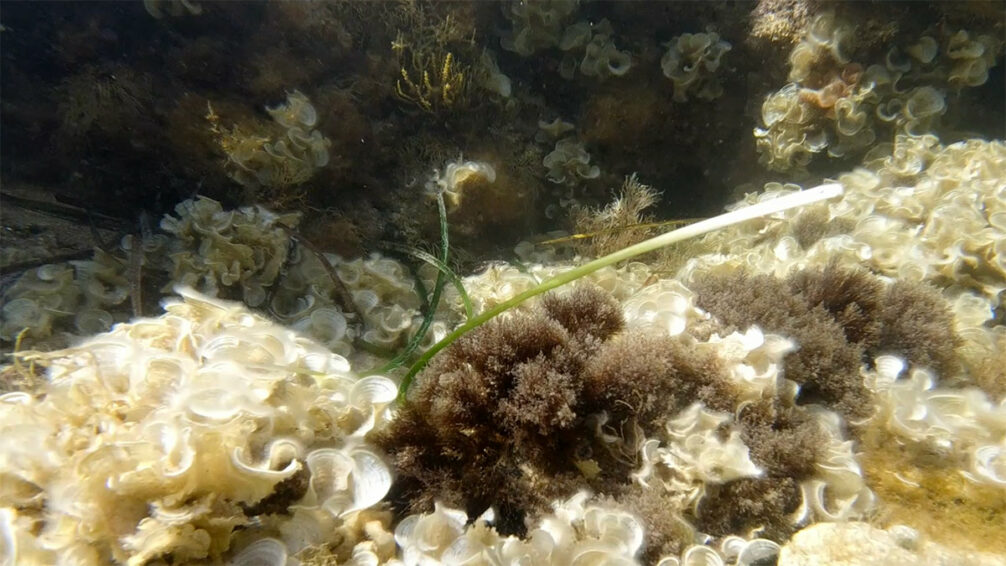
Another cause for the disappearance of seagrass is both ship anchoring and trawling fisheries. These two activities tear seagrass from the seabed destroying meadows dating back centuries or even millennia and alter the very physical and biological structure of the seabed and coastline. Posidonia acts as a carpet that prevents underwater sediment from erosion, which essentially protects beaches from losing sand or gravel while serving as a home for more than a thousand marine species. Some include seahorses, fish, sea urchins, starfish, cuttlefish, octopus, molluscs and crustaceans.
The meadows serve as nesting and breeding grounds and provide protection from predators. It is also a nutrient- and oxygen-rich environment on which many species rely on for their survival. Uprooting caused by illegal anchoring or fishing with large bottom-dragging nets destroy these fish shelters, which is harmful to both land and sea life alike.
To prevent this, the European Union promotes restoration and protection of Posidonia meadows. Buoys need to be installed all around the Mediterranean to ensure that anchoring is not needed for either small or large ships especially in protected areas. If anchoring were to be strictly necessary it is advisable to do so with anchors designed to do the least damage possible and to do so in areas without seagrass where sand is visible.
Ports and seawalls
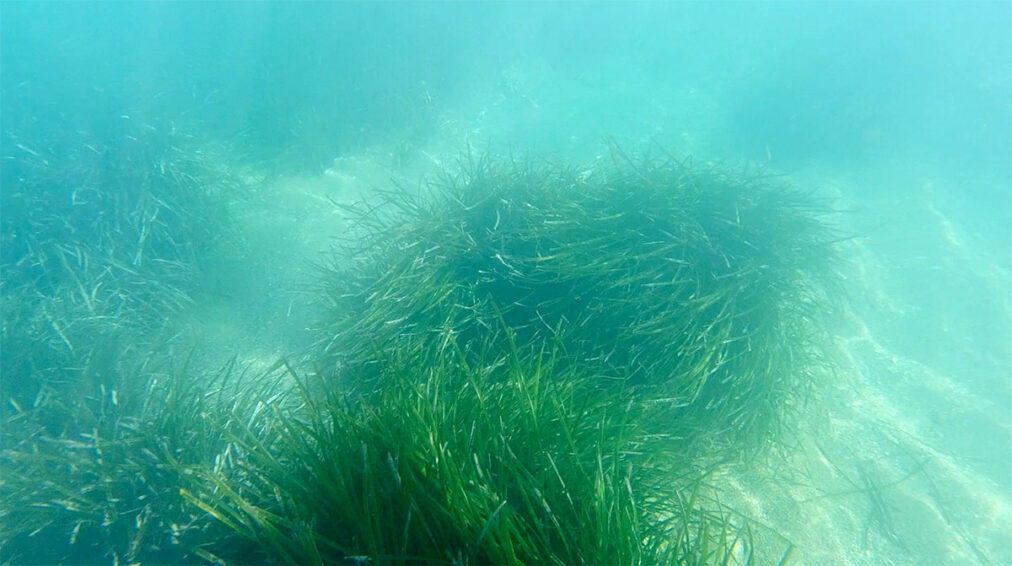
Ports and seawalls can alter coastal ecosystems and topography by introducing artificial barriers and changing sea flows. The construction or expansion of ports often modifies the accumulation of sediments and increases the turbidity of the water. This can prove fatal to ecosystems, as not only are the seabed and seagrass buried beneath the port, but also all sediments coming from rivers that save beaches from erosion and bring in new nutrients will only lie on one side of the port’s seawall. Meanwhile the seagrass population on the other end of the wall often shrinks in size over the years.
These changes can fragment and modify the meadow surface and health. Pollutants present in a port’s water can also further block Posidonia’s photosynthesis, putting meadows under stress and posing a risk to other species that benefit from seagrass. Even if measures are taken to recover seagrass after the construction of a port or seawall it often takes decades to see signs of recovery since these processes tend to be slow and sensitive to changes in environmental conditions and water quality.
This is why proper planning and management of ports and waste disposal are essential to protect marine life from anthropogenic environmental damage and why legislation must ensure the protection of nature in coexistence with humanity. It is a necessity to act responsibly on land and at sea to keep water clean, especially when seagrass is such an essential part of nature’s effort to sustain its own balance.
A shared responsibility for the sea
Protecting Posidonia oceanica is not only the responsibility of governments, scientists, or environmental organizations, it is a shared duty among all who navigate and benefit from the Mediterranean. Every sailor, fisher, port authority, and coastal community plays a part in preserving these ancient underwater forests (the oldest of them being up to a hundred thousand years old).
Simple choices, such as anchoring responsibly, reducing waste, respecting protected areas and supporting sustainable coastal development, can collectively make a meaningful difference. By recognizing the value of Posidonia meadows and acting consciously both at sea and on land, we ensure that future generations inherit clear waters, thriving marine life, and resilient coastlines. Sailing responsibly is not a restriction, it is a commitment to safeguarding the very beauty and freedom that draw us to the sea.
Author’s Note
Written by Salvador A. de Iriondo, former sailor and Geography student. Passionate about nature and environmental protection, he shares his perspective to encourage responsible interaction with the Mediterranean Sea within the ILCA sailing community.